

SP-33 ESD Epoxy Floor Coating
SP-33 is a pre-pigmented, electrostatic dissipative (ESD), 100% solids epoxy.
Overview
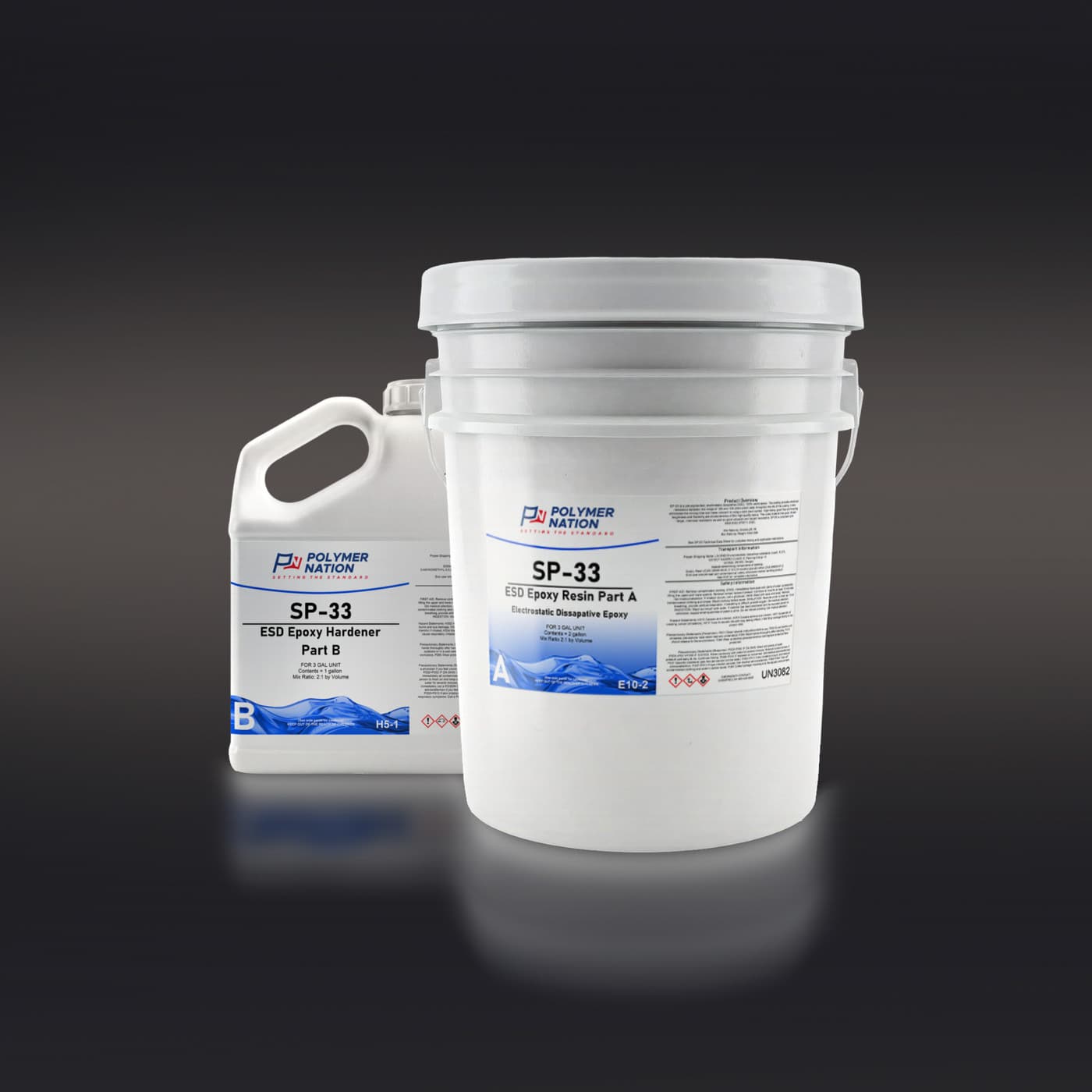
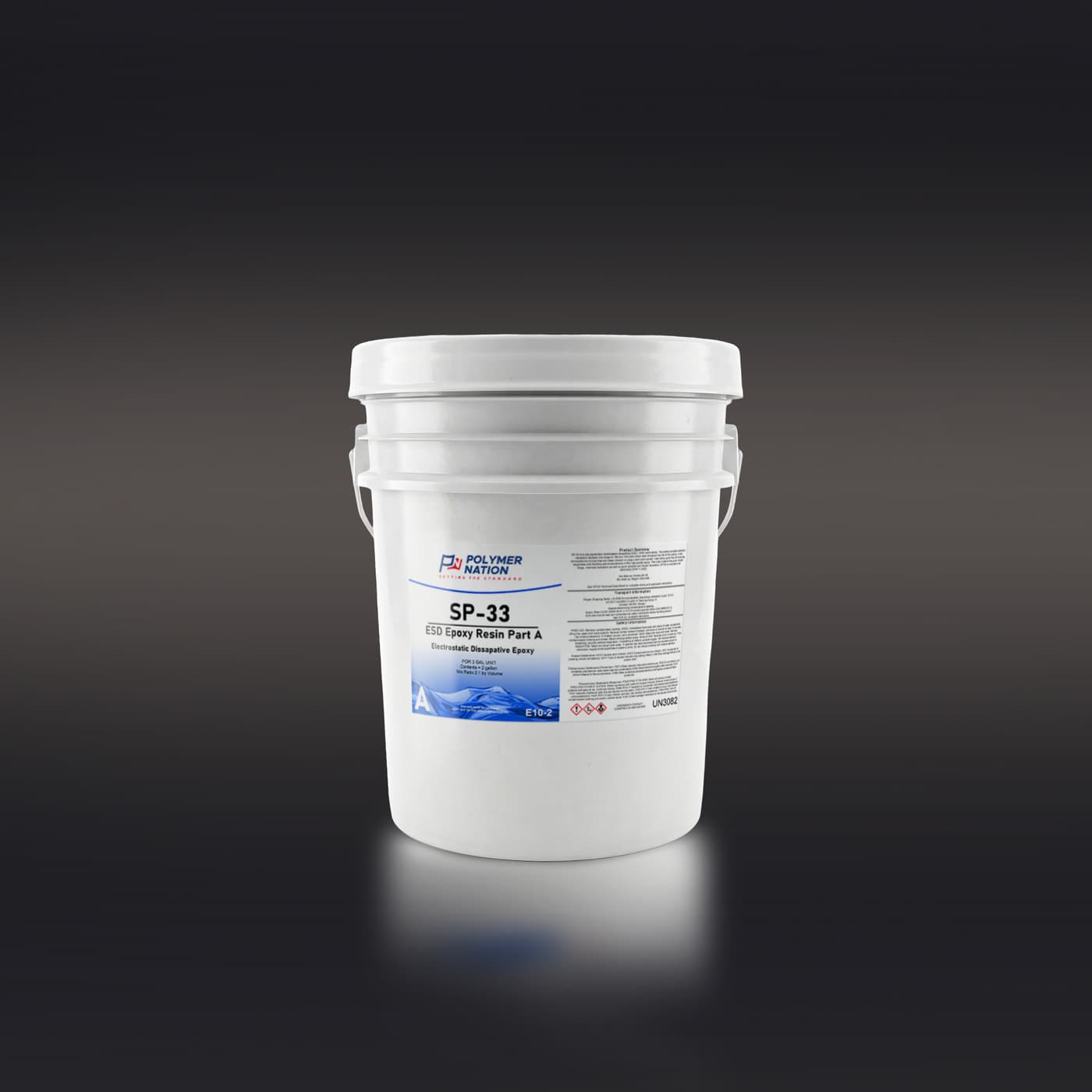
SP-33 is a pre-pigmented, electrostatic dissipative (ESD), 100% solids epoxy. The coating provides electrical resistance between the range of 10^6 and 10^9 ohms which lasts throughout the life of the coating. It also eliminates the mixing time and mess inherent in using a color pack system. High-hiding, good flow and leveling, toughness and flexibility are characteristics of this high-quality epoxy. The cured material has good, broad-range, chemical resistance as well as good abrasion and impact resistance. SP-33 is compliant with ANSI/ESD STM7.1-2020.
Uses and Benefits
SP-33 is most often used in areas which contain equipment or instrumentation that is susceptible to electrostatic discharge. Areas such as these include but are not limited to: server farms, processing areas, clean rooms, electronics manufacturing/assembly and many others. The recommended coverage of SP-33 is 80-100 sq. ft/gal (16-20 mils) of mixed resin. Multiple coats may be applied to achieve higher build; the recoat window is 12-24 hours. If a second coat is applied after 24 hrs. of the first coat being applied, lightly sand or scuff the basecoat and then solvent wipe the surface with xylene to remove any loose dust or particles. ** Note** If SP-33 is applied too thin, the electrostatic dissipative properties will be diminished and will increase the risk of being non-compliant.
Limitations
SP-33 is designed to be applied at 16-20 mils as a body coat and 10-16 mils as a topcoat. Ideal application temperatures to be between 60-90°F. Cooler temperatures will increase cure times. Warmer temperatures will decrease working and cure times. Verify that substrate temperature is above 5 degrees of dewpoint during application and cure of material to avoid a potential amine blush. Note: Tile Red and Warm Sun appear slightly darker due to carbon black content.
Preparation
The preparation method for each project is determined by a full understanding of the substrate to be coated, the chemistry of the coating system being used, the coating system thickness, and numerous other factors. The coating installer should fully read and understand ICRI Guideline NO. 310.2R-2013 and OSHA 29 CFR 1926.1153 before starting preparatory work. The aim, of preparing a substrate for coating applications, is to roughen the surface, remove weak layers, contaminants, dirt, debris and present a solid, clean, dry substrate for the primer. If unsure as to the level of preparation needed contact Polymer Nation at Lab@polymerNation.com.
Key Benefits
- Static Dissipative
- Stain Resistant
- Durable
- Easy Maintenance
- Low Odor/VOCs
- Abrasion Resistant
- Medium Duty
- Wear and Chemical Resistant
- Self Leveling
- Slip Resistant
Technical Data
At a glance: the specs most teams decide on.
- Shore Hardness @ 24 Hours
- 65Shore D
- Shore Hardness @ 7 Days
- 75-80Shore D
- Gloss @ 60° Angle
- 90+Applying material close to dew point will decrease gloss and may result in an amine blush
- VOCs of Mixed Material
- <50 g/lEPA Method 24
- Color Scale per ASTM D1500
- 0.5-1.0Clear to slightly amber before colorants are introduced
- Solids by Volume (Mixed)
- 100%
- Working Time
- 35-45 minutes
- Gel Time
- 45/30/15 min.Warmer temperatures will decrease gel time and lower temperatures will increase gel time
- Dry to Touch
- 6-10 hoursWarmer temperatures will reduce time and colder temperatures will increase time
- Through Dry
- 10-12 hoursWarmer temperatures will reduce time and colder temperatures will increase time
- Dry to Walk
- 12/8/6 HoursWarmer temperatures will reduce time and colder temperatures will increase time
- Dry to Lightly Use
- 16-24 hoursWarmer temperatures will reduce time and colder temperatures will increase time
- Full Cure
- 7 daysWarmer temperatures will reduce time and colder temperatures will increase time
- Number of Components
- 2
- Mix Ratio (Liquids by Volume)
- 2:1It is always preferred to mix the entire kit, whenever possible, to avoid off-ratio mixtures
- Mixed Viscosity @ 25°C/77°F
- 500-800 cP 25°C/77°FWarmer temperatures will reduce viscosity and lower temperatures will increase viscosity
- Ideal Application Temperature
- 60-90°FVerify that substrate temperature is above 5 degrees of dewpoint during application and cure of material to avoid a potential amine blush
- Application Thickness
- 10-20 (80 – 160 sq.ft./gal.)
- Coverage Per Mix
- 80-100 sq. ft/gal
- Odor
- SubtleMeasuring odor offensiveness is difficult so experience with chemicals has been consulted here
- Storage Temperature
- 60-80 degrees FStore material between 60-90 degrees F in a protected dry location.
Colors & Packaging
Colors
Tap a color to enlarge. Swatches are a representative guide. Request a physical sample for color-critical work.
Packaging
- Available sizes
- 3 Gallons15 Gallons165 Gallons
- Note
- Special packaging is available based on size of order and time constraints
Where It's Used
Markets

Mixing & Application
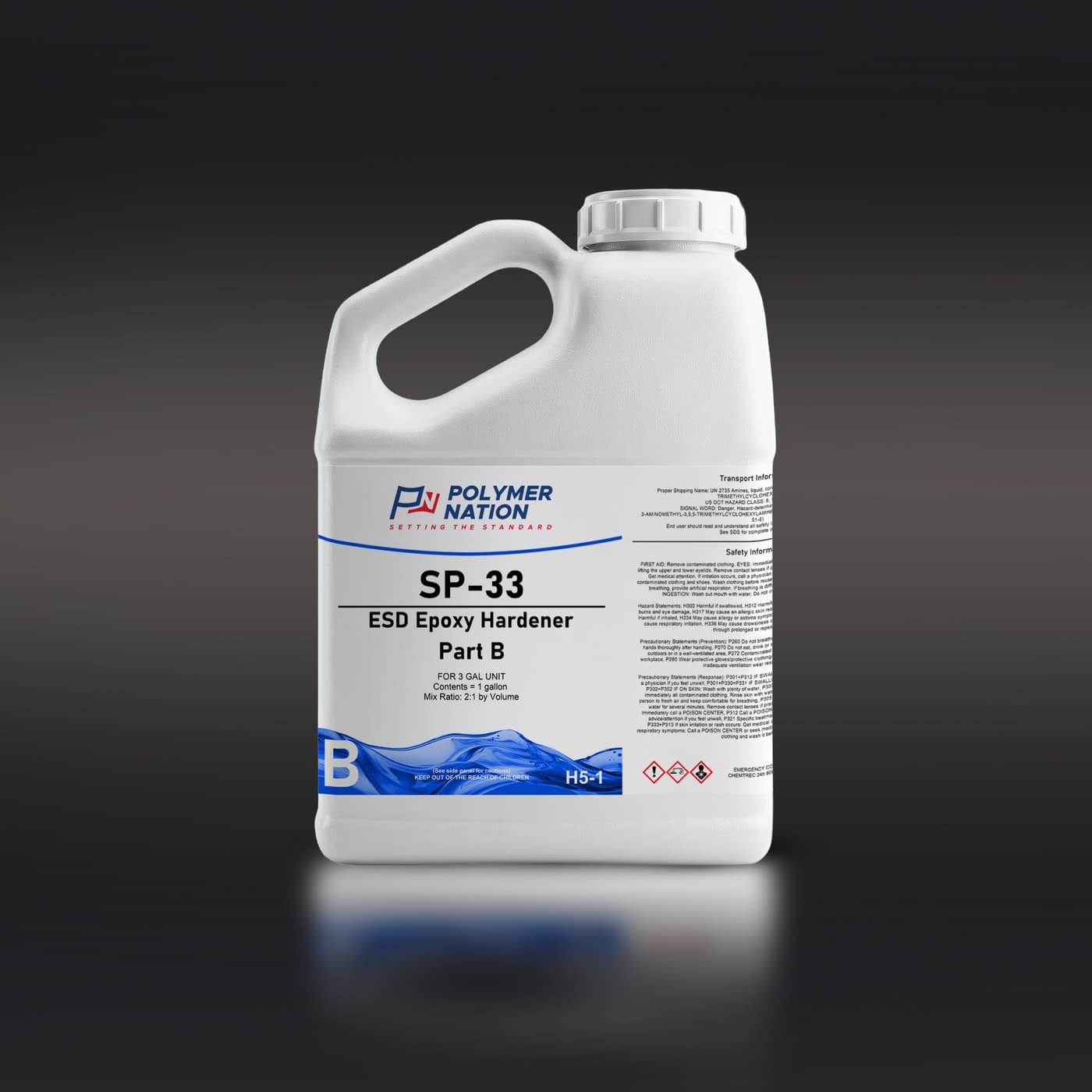
It is always recommended to mix the entire kit, whenever possible, to avoid off-ratio mixtures. Mix ratio is 2 parts SP-33 Part A to 1 part SP-33 Part B. Combine all of part A and B into a single container, large enough to except the entire kit. Mix using a 350 RPM mixer using an appropriate mixing blade for 1.5 – 2.5 minutes making sure to not introduce excessive air into the material.
Disposal: Dispose of material, containers, solvents, etc., per Federal, State and local guidelines, rules and laws.
More Epoxies
Related products
Complete the system or compare close alternatives in the same family.
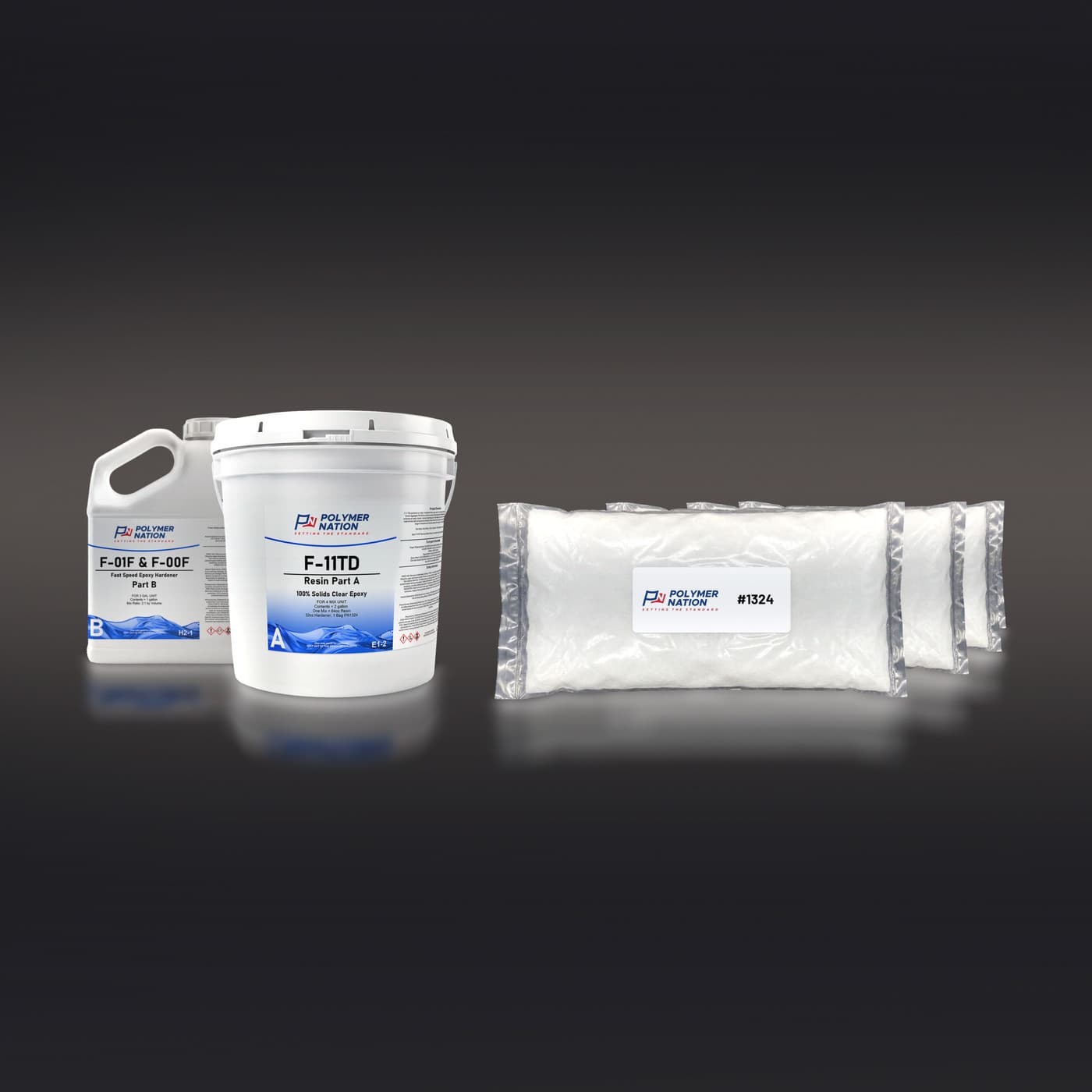
Made in the USA · Tech Support Included
Need SP-33 for your project?
Our team will help you spec the right system, quantities, and colors, and get you a quote fast.